
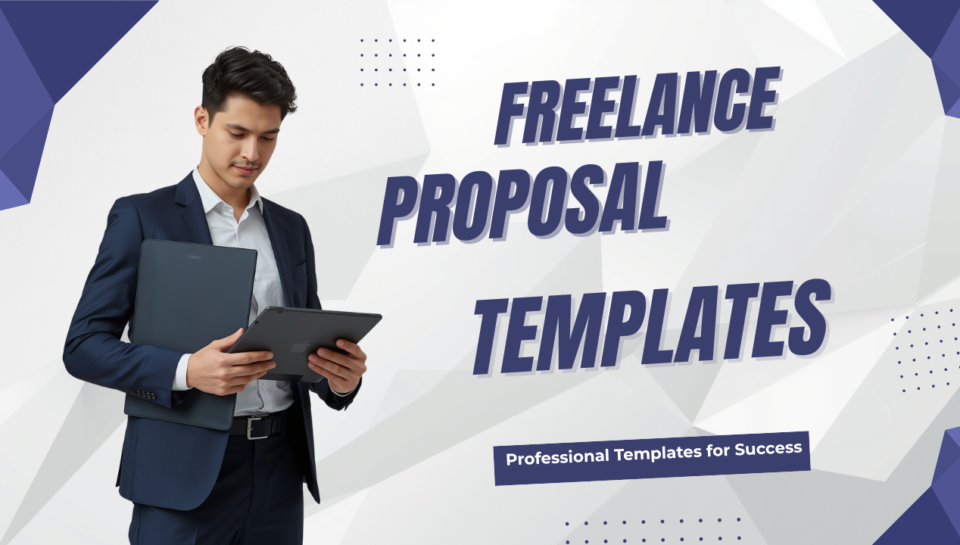
A strong freelance proposal template includes five sections: a project overview that reflects the client’s brief back to them, a scope of work defining exactly what is and is not included, a timeline, a pricing breakdown with payment terms, and a clear call to action for signing and paying a deposit. Proposals that follow this structure consistently outperform generic templates because they show the client that you understood their problem — not just that you have services to sell. The most effective freelance proposals are sent via an e-signature tool that connects proposal approval, contract signing, and deposit payment in a single client session.
Why Most Freelance Proposals Don’t Convert — And What the Winning Ones Do Differently
A freelance proposal fails to convert not because the price is wrong, but because it doesn’t demonstrate that the freelancer understood the client’s specific problem.
The most common version of this mistake looks like a capabilities document: a paragraph about your background, a list of services you offer, a price at the bottom, and a line that says “let me know if you have any questions.” This is a brochure. It tells the client what you do. It does not tell them what you are going to do for them — and that distinction is the entire difference between a proposal that converts and one that gets ghosted.
When a client reads a proposal, they are not primarily evaluating your skills. They are asking one question: does this person understand my situation? The proposal that mirrors their brief — their goal, their concern, their specific constraint — answers that question before they have to ask it. The one that describes your general capabilities does not.
The personalisation does not need to be extensive. A 10-minute rewrite of the Project Overview section to reflect the specific conversation you had with that client is enough to separate your proposal from every generic template they receive. Volume does not compensate for relevance — freelancers who send tailored proposals to fewer clients consistently convert at higher rates than those sending identical templates to everyone.
One practical note for context: US clients typically expect itemised pricing with line-by-line clarity. UK clients in creative industries are more accustomed to a project rate with a scope narrative. The five-section structure works for both — only the pricing format changes.
What Should a Freelance Proposal Actually Include?
A freelance proposal should include exactly five sections — and deliberately exclude anything that adds length without helping the client make a decision.
| Section | What It Does | Common Mistake to Avoid |
|---|---|---|
| Project Overview | Mirrors the client’s brief back in your own words | Writing “I understand you need a website” — show specifics from your actual conversation |
| Scope of Work | Defines what IS and IS NOT included — line by line | Vague scope with no exclusions list — this is where scope creep starts |
| Timeline | Project phases with dates or durations | Missing the contingency line: “timeline begins on contract signing and deposit receipt” |
| Pricing & Payment Terms | Total cost, deposit percentage, payment schedule, accepted methods | Burying the price at the bottom; omitting a deposit requirement entirely |
| Call to Action | What the client does next — sign, pay deposit, confirm by date | Ending with “let me know if you have questions” instead of a direct next step |
Length should follow complexity, not ambition. A proposal for a project under £1,000 or $1,500 should fit on one page. Larger engagements warrant two to three pages. A proposal that takes more than five minutes to read loses most clients before they reach the pricing section — they open a shorter one from the next freelancer instead.
What to leave out is equally important. A long “about me” section belongs on your website, not in a proposal the client is reading to make a purchasing decision. Generic testimonials embedded in the proposal document add length without credibility. Pricing caveats like “costs may vary depending on final scope” introduce ambiguity at the exact moment you want the client to feel confident enough to sign.
The scope section of your proposal becomes the foundation of your contract once the client says yes. For the cleanest handoff between the two documents, see freelance contract templates — aligning your proposal scope with your contract terms eliminates the most common source of mid-project disputes.
A Freelance Proposal Template You Can Use Today
This template follows the five-section structure above — customise the bracketed fields for each client, and keep the section headings consistent across every proposal you send.
[Your Name / Business Name] Proposal for [Client Name] — [Project Name] Prepared: [Date] | Valid for 14 days
Project Overview
Based on our conversation on 2026, you’re looking to [restate the client’s goal in 2–3 sentences using their words, not yours]. The core challenge as I understand it is [specific problem they described]. This proposal outlines how I’d approach that.
Scope of Work
This project includes:
- [Deliverable 1 — specific and measurable, e.g. “5-page WordPress website with contact form and mobile-responsive layout”]
- [Deliverable 2]
- [Deliverable 3]
- rounds of revisions included
This project does not include: [list explicitly — e.g. copywriting, photography, third-party tool costs, hosting setup, SEO configuration, ongoing maintenance].
Timeline
- Project start: 2026
- Final delivery: 2026
Timeline is contingent on timely client feedback at each review stage.
Investment
Total project fee: [£/$ amount] Deposit due on signing (50%): [£/$ amount] Balance due on final delivery (50%): [£/$ amount]
Accepted payment methods: [Stripe / bank transfer / PayPal]
Next Steps
To confirm this project, please review the scope above and sign this proposal by 2026. I will send the project contract for e-signature immediately after, and the deposit invoice will follow.
[Sign and Confirm →]
Three sections need to be rewritten fresh for every client — never reused from a previous proposal. The Project Overview must reflect the specific conversation you had, not a generic restatement of the project type. The scope exclusions list must be updated to match what this client might reasonably expect to be included based on their brief. And the “valid for” date must be a real future date — a blank or placeholder here signals the proposal was not actually prepared for them.
The 14-day validity window is standard practice rather than a legal requirement, but it serves a genuine purpose: it prompts a decision without creating pressure. Clients who need to “think about it” indefinitely rarely convert — a natural deadline makes the decision concrete without being aggressive.
Tools like GetProPaid let you build this template once and send it as a live proposal link. The client reads it in the browser, approves it inline, signs the attached contract in the same session, and pays the deposit immediately after. No PDF attachment, no email chain asking for a signature back, no separate invoice to chase.
How Do You Send a Freelance Proposal Professionally?
Sending a freelance proposal as a PDF email attachment is the slowest and least professional delivery method available — and it is still how most freelancers send their proposals.
The practical problems with the PDF method compound quickly. You have no way of knowing whether the client opened it, how long they spent reading it, or whether they got stuck on a specific section. There is no built-in signing mechanism — the client either has to print, sign, and scan it back, or they send a reply email saying “this looks good” and you proceed on a verbal agreement that holds up poorly if anything goes wrong later. There is no payment link, so the deposit requires a separate email and a separate follow-up. And the “valid for 14 days” line you included means nothing — there is no system to enforce it.
The e-proposal method removes every one of those problems. The client receives a link rather than an attachment. The proposal opens in their browser — readable on any device, no download required. They can approve it inline, sign the contract that auto-attaches in the same session, and pay the deposit before they close the tab. You receive a notification the moment each step is completed. The timestamp of every action is recorded automatically — no dispute about when the client agreed to what.
On the question of which tool to use: PandaDoc is well suited for agencies handling complex, design-heavy proposal documents. Better Proposals is strong for visual presentation. GetProPaid is designed for freelancers who need the proposal, contract, and deposit payment connected in a single flow without subscribing to three separate tools to accomplish it. For the mechanics of what happens after the client signs, how to send contracts as a freelancer covers the full process.
What Does a Complete Freelance Proposal Workflow Look Like?
A complete freelance proposal workflow ends the moment the client pays the deposit — not the moment they say yes.
The gap between those two events is where most projects go wrong. A client says yes on a call. You celebrate. You start making notes about the project. Three days later you send the proposal. They say it looks great. You ask them to sign a contract. They say they’ll get to it. A week passes. You follow up. They apologise and sign. You send the deposit invoice. Another week passes. You follow up again. Work has not begun, but you have already invested time in planning, and the client has already set a launch expectation based on a timeline that started from the call, not from when the deposit actually arrives.
The workflow that closes this gap:
Discovery call → proposal drafted using template
Proposal sent as live link → client reads and approves
Contract auto-attaches → client e-signs in the same session
Deposit invoice generated → client pays via card link
Project begins with full documentation confirmed on both sides
GetProPaid is built around this sequence — the proposal, contract, and deposit collection happen in a single client session with no gap between them and no separate tool required for each step.
The specifics vary by profession but the structure is the same. Freelance designers can embed a style reference or mood board link in the Project Overview so the client sees visual direction alongside the scope. Developers billing by milestone can map each scope deliverable to a payment trigger in the contract automatically. Copywriters can include word count, topic list, and revision terms in the scope section so these become binding contract clauses without a second document. Video editors can specify deliverable format, resolution, revision rounds, and raw footage ownership directly in the proposal — eliminating the conversation that usually happens after delivery when the client asks for something that was never included.
Frequently Asked Questions
How long should a freelance proposal be?
A freelance proposal should be one page for projects under £1,000 or $1,500, and two to three pages for larger engagements. Length should be determined by the complexity of the scope — not by a desire to appear thorough. A proposal that takes more than five minutes to read loses most clients before they reach the pricing section.
Should a freelance proposal include pricing?
Yes — always. A proposal without pricing is an incomplete document that forces a follow-up conversation before the client can make a decision. Include the total project fee, deposit amount, payment schedule, and accepted payment methods. Clients who need to ask about pricing are less likely to convert than those who can review and sign in a single session.
What is the difference between a freelance proposal and a freelance contract?
A freelance proposal outlines what you will do, when you will do it, and what it costs — it is a commercial document designed to win the project. A freelance contract is the legally binding agreement that governs the work once the client has said yes. The proposal scope becomes the foundation of the contract — both documents should be consistent with each other.
How do I write a freelance proposal for a client I have never worked with before?
Start with a discovery call or a written brief from the client before writing the proposal. The Project Overview section should reflect their specific situation — not a generic description of your services. Reference details from your conversation: their deadline, their concern, their stated goal. A proposal that mirrors what the client told you is significantly more likely to convert than one written from a template alone.
Do freelance proposals need to be signed?
A proposal approval — whether signed or confirmed by email — creates an implied agreement, but it is not a legally binding contract on its own. Best practice is to attach a contract for e-signature at the moment the client approves the proposal, and to collect the deposit simultaneously. This three-step sequence — approve, sign, pay — closes the project without ambiguity on either side.